We weren’t building another scientific search engine. We were designing a research workflow that could help scientists move from uncertainty to an evidence-backed next step.
Scinode Deep Research is an AI research workspace for chemists. It brings literature, patents, molecules and synthesis routes into one place, so a question can become a research path.
The problem
Researchers could find scientific information, but turning a question into a structured, evidence-backed research path was fragmented across multiple tools and sources.
Product goal
Make Deep Research the shortest path from a scientific question to an actionable research decision.
Success = Activation + Research depth + Repeat usage
The core experience
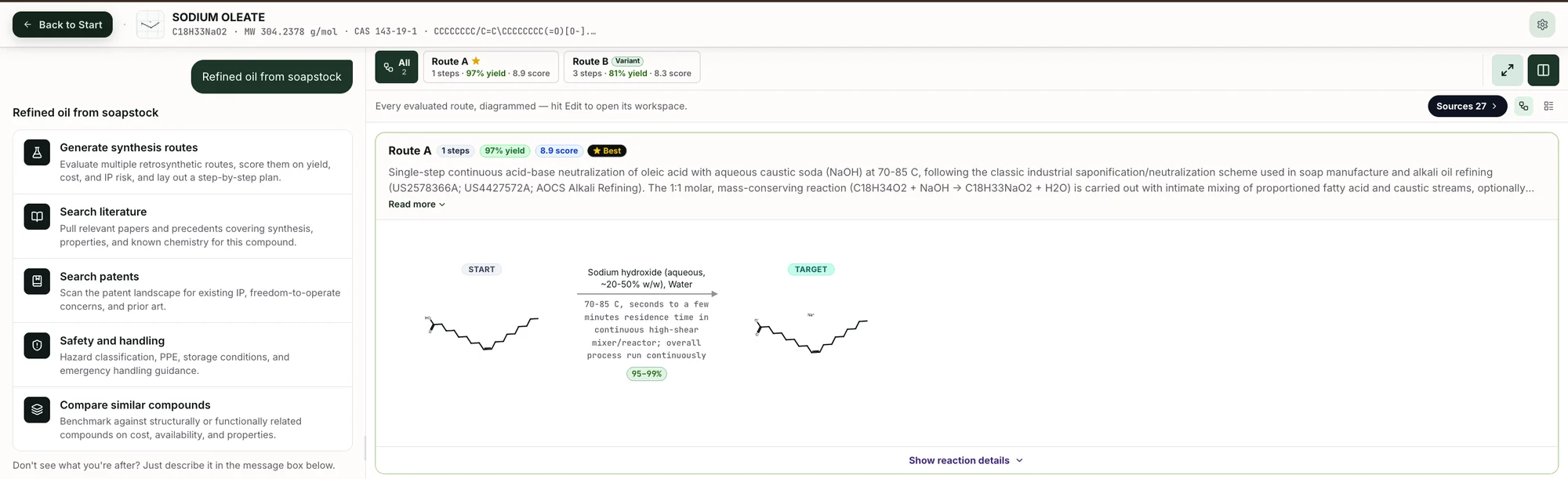
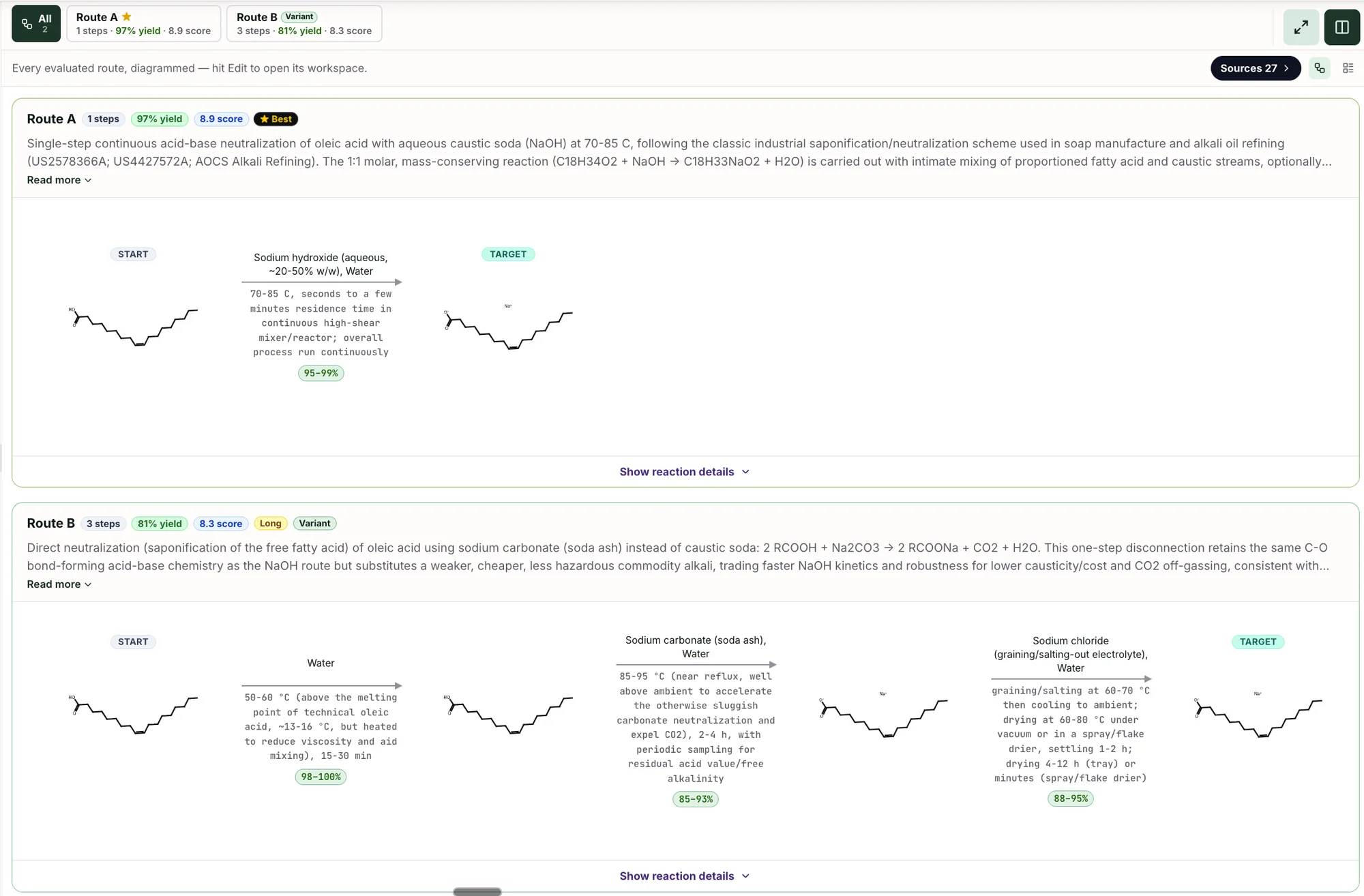
Question → research context → AI research. A molecule is resolved, then evaluated routes are scored and compared, with the best one flagged.
The research journey · Scinode Deep Research
A question becomes a research decision.
01
QUESTION
What is the best route to synthesize X?
Measured
02
CONTEXT
Molecule · Objective · Constraints
Activation rate
03
EXPLORE
Literature · Patents · Experiments
Research completion
04
REASON
Evidence → Connections → Insights
Depth / quality
05
DECIDE
Route · Recommendation · Next experiment
Outcome rate
Research credits (neutrons) flow along the route
The shift
Researchers move from searching for information to building evidence-backed scientific decisions.
What success looks like
Success isn’t more searches. It’s helping researchers reach a confident next step with less research friction.
Key insights
01
Researchers don’t think in isolated searches. They work through evolving research contexts.
02
Research depth varies significantly by question, so a fixed unit of usage fits badly.
03
Continued research is a stronger signal of value than a single completed search.
Product decisions
01
Product decision
Search → Research context
Research context over isolated searches
Researchers often work across multiple questions and molecules, so we moved beyond isolated searches toward persistent research contexts.
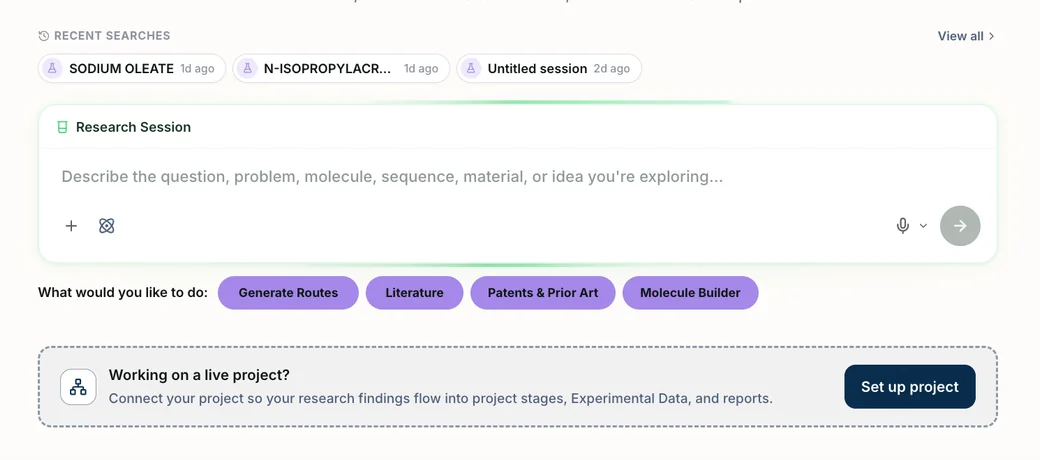
A research session starts from a question, and can be tied to a live project.
02
Product decision
Molecule limits → Usage-based credits
Credits over molecule counts
Molecule-based limits didn’t map well to how researchers actually worked. We explored a research-consumption model using AI credits.
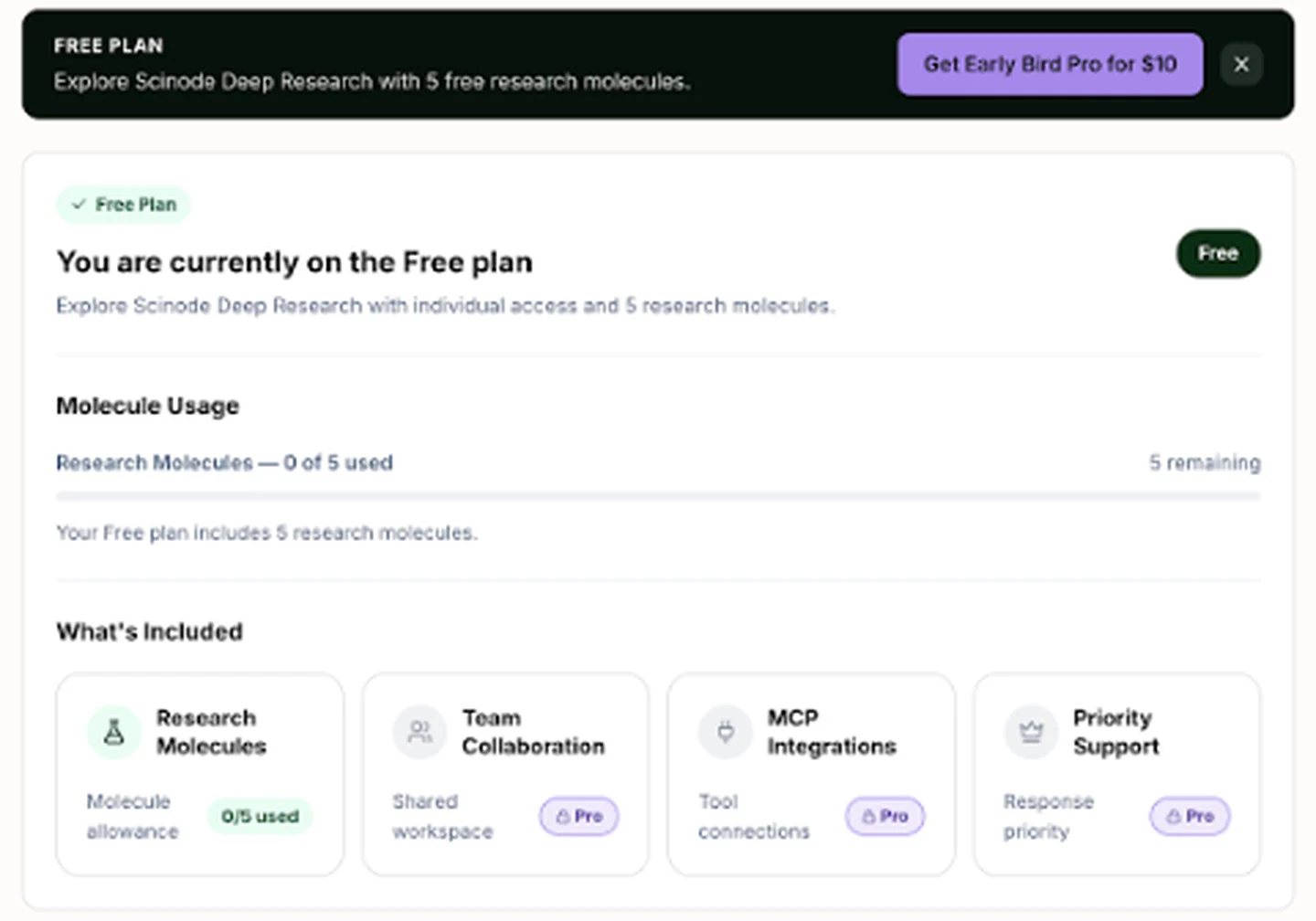
Where we started: fixed molecule limits.
Usage-based AI credits
Usage follows how deep the research goes.
Research is organised in projects, and AI credits are consumed in proportion to the work, instead of a fixed count of molecules.
Where we moved: usage-based credits.
03
Product decision
Private research → Controlled collaboration
Private by default, shared with control
Research was private by default, with team-based sharing introduced for collaboration and governance.
We had to balance a research experience that felt open-ended to scientists with predictable AI consumption and a viable usage model.
The product
Three screens carry the experience.
Route results: steps, yield and a score for each route, with the best one flagged.
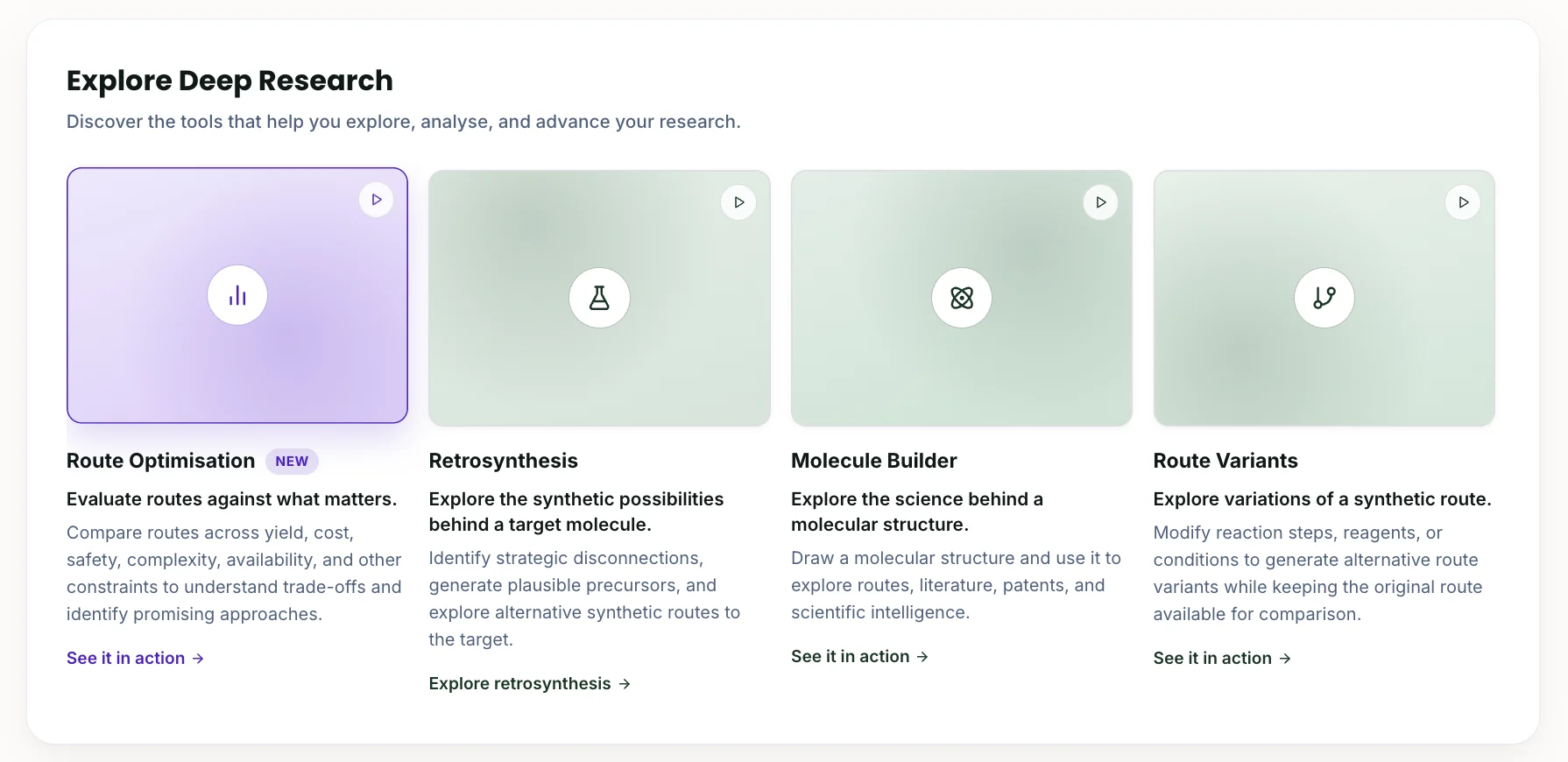
Four ways in.
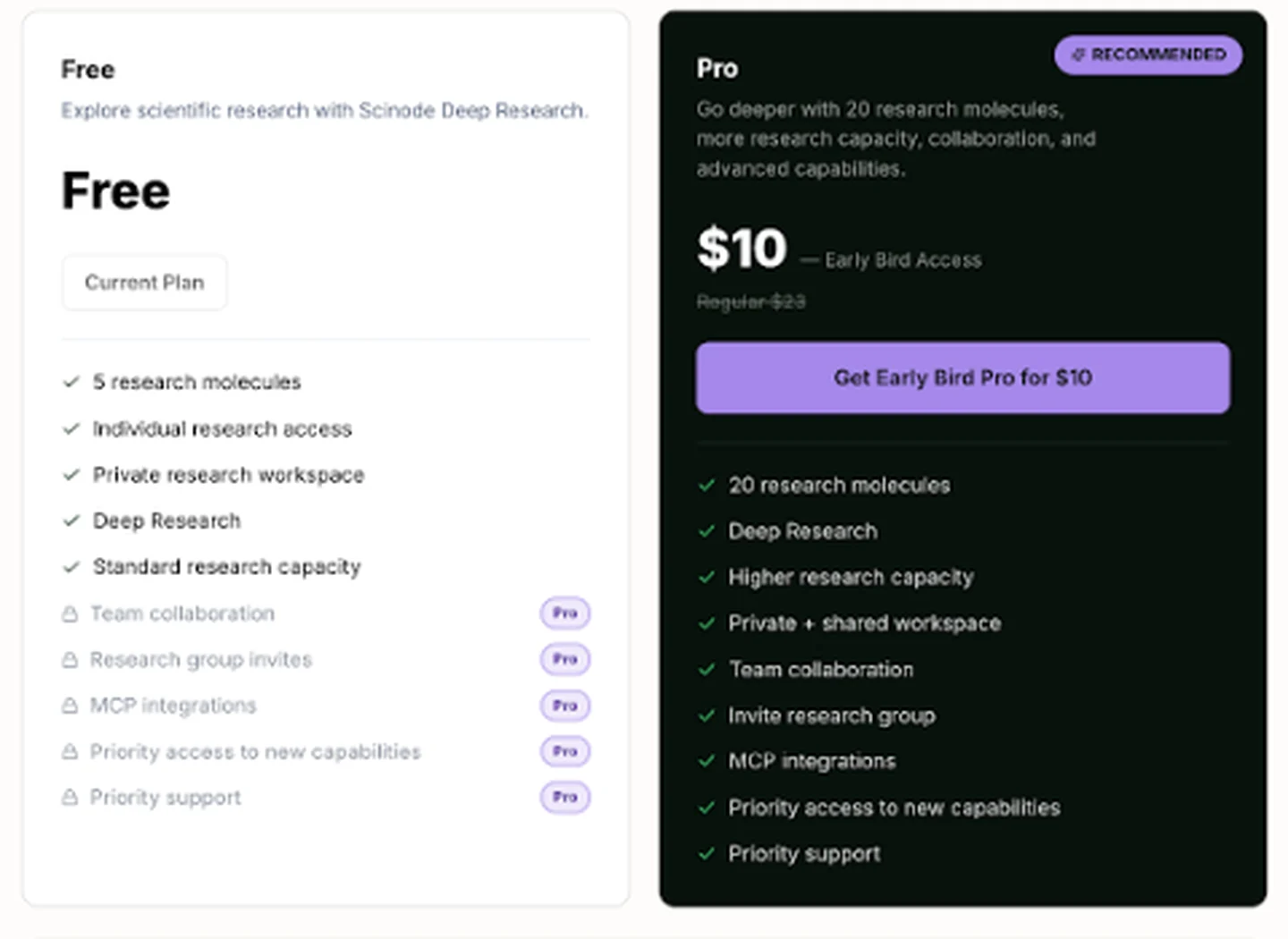
Free and Pro plan structure.
Usage and business model
Project-based research
Work is organised around evolving research contexts, not single molecule searches.
Usage-based AI credits
Consumption follows how deep the research goes.
Free for individuals, paid for teams
Collaboration and shared workspaces sit on paid plans.
GTM and launch
Researcher acquisition across IITs and research institutes.
End-to-end ownership: 0→1 product strategy, UX, research workflows, usage and pricing model, GTM and researcher acquisition across IITs and research institutes.
Outcome
500+
Researchers
4K+
Molecules researched
63%
Repeat research rate
How I measured success
QUESTION
A scientific question starts a session.
ACTIVATION
500+
Researchers who started meaningful research.
RESEARCH
4K+
Molecules and research activity.
REPEAT
63%
Returned for subsequent research.
VALUE
Continued research and actionable outputs.
Measured through product analytics across activation, research activity and repeat usage.
What I learned
Usage showed that researchers don’t think in isolated molecule searches, they work through evolving research contexts. This led us to shift the product model from molecule-based usage toward project-based research with usage-based AI credits.